

Club founding.
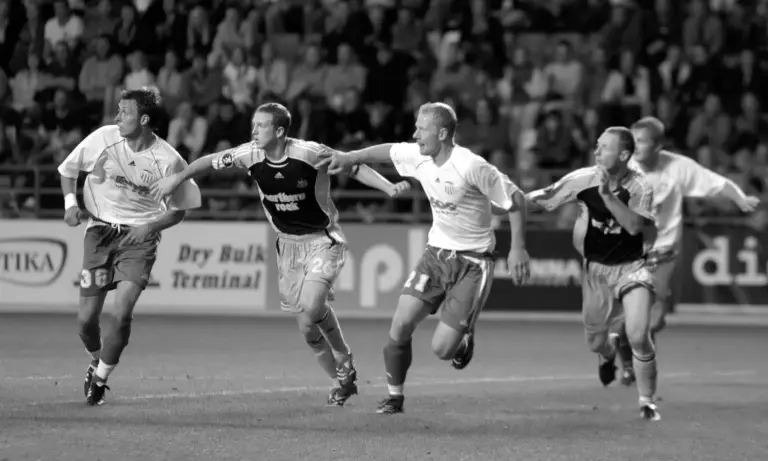
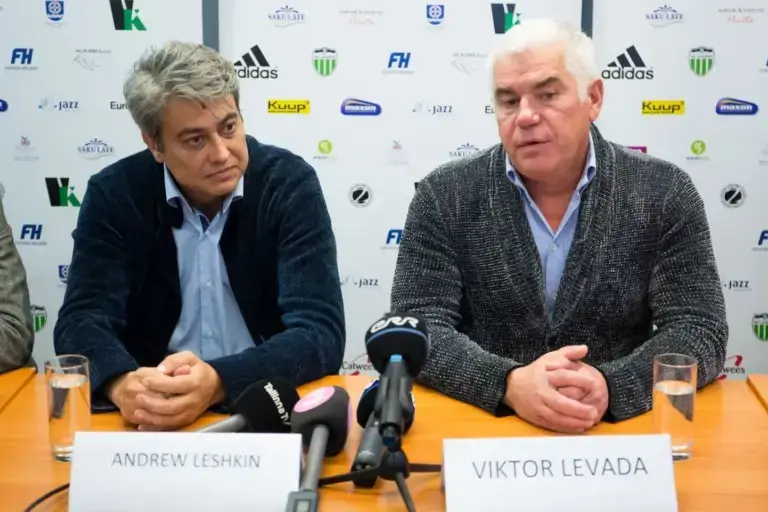
The history of FCI Levadia dates back to 1998, when representatives of Maardu FK Olümp, a club competing in the Esiliiga, approached Viktor Levada — owner of Levadia OÜ, a local company dealing in metal and steel constructions — with a request to support the club. Levada, a football enthusiast originally from Ukraine, seized the opportunity and Levadia became the team's title sponsor.
In 1998, Estonian football transitioned from an autumn-spring system to a spring-autumn system, and as a result a short season was held in the autumn. Maardu FC Levadia won the Esiliiga convincingly without losing a single match, securing promotion to the Meistriliiga. The team played in blue kits at the time. Levada decided to take the development of football seriously. On 22 October, the non-profit association SK FC Levadia was founded and Levada became the club's president. FC Levadia's colours were chosen as green and white — green because "Levadia" means "meadow" in both Ukrainian and Greek.
First matches and titles in the Estonian top flight.
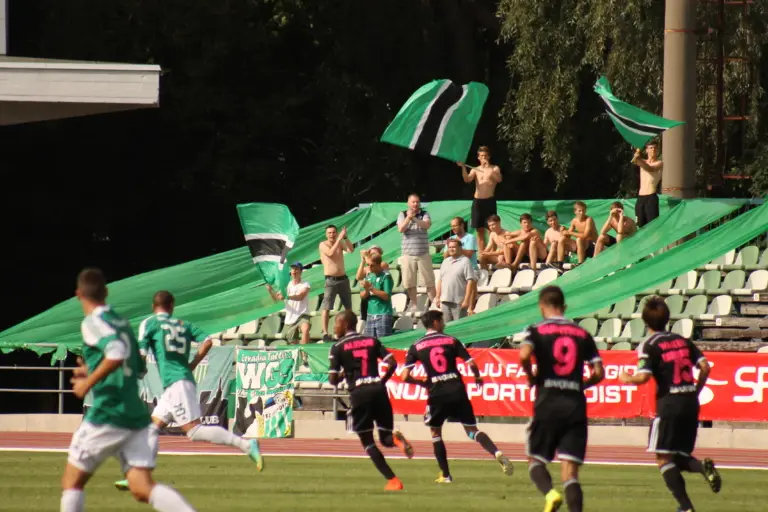
Before the start of the season, FC Levadia merged with JK Tallinna Sadam, who had finished second in the Meistriliiga, gaining excellent players as well as the opportunity to compete in the UEFA Cup. The team was joined by head coach Sergei Ratnikov, first captain Igor Prins, as well as Konstantin Kolbasenko (later Nahk), Maksim Rõtškov, Indro Olumets, Andrei Krõlov and several others. The club's home matches were held at Maardu City Stadium. The debut season proved to be an outstanding success for the new club — Maardu FC Levadia came, saw and conquered everything possible!
The club supported its fans' activities in every way, providing them with shirts, drums and the opportunity to travel to away matches free of charge. At the time the club had no website of its own, and one of the fans of that era, Sergei Mihhailov — who now works at ERR — developed the club's website and forum, where the team's matches were discussed and performances analysed.
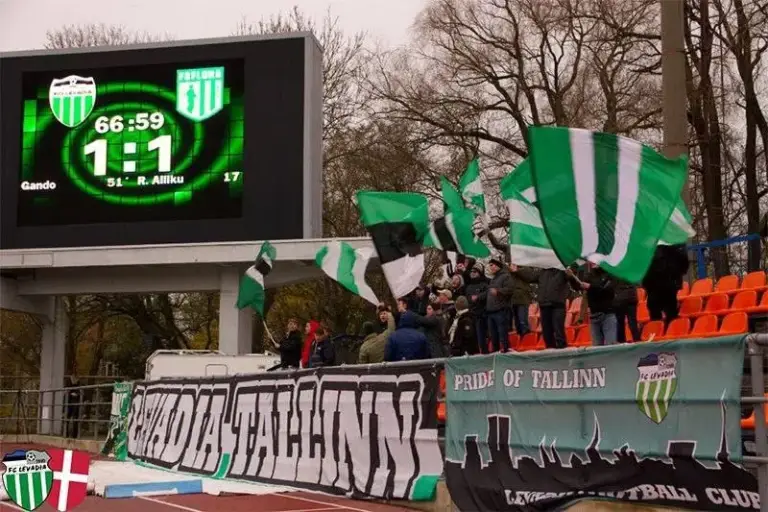
Maardu FC Levadia's triumph continued as the millennium arrived! In the Champions League, the gold medals were won again without losing a single game, this time beating FC Flora by 19 points and bronze medal winners Tallinn FC TVMK by 26 points. Krõm shared the title of the season's top scorer with TVMK striker Egidijus Yuska, both men scored 24 times. In the cup final Maardu FC Levadia met again with Viljandi JK Tulevik and won 2:0. The same clubs also met in the Super Cup final, with FC Levadia winning 2-1 in extra time at Kuressaare Municipal Stadium.
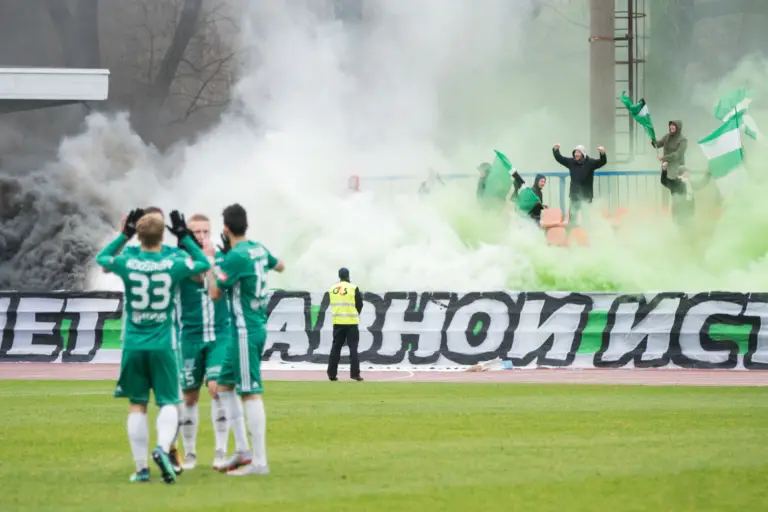
Maardu FC Levadia's third season in the Champions League was not as successful as the previous two. Before the start of the football year, the player rights of main goalkeeper Sergei Pareiko were sold to Russian Premier League club Volgograd Rotor. The team was coached by
Sergei Bondarenko, who led the team to a third place finish in the autumn. FC Flora, who won the gold medal, were eventually beaten by 13 and the silver medallists.
FC TVMK by one point. Toomas Krõm scored 20 goals and Vladimir Chelnokov 13 during the season. Newcomers to the Champions League, Tallinn FC Levadia's debut under Eduard Võrku ended in sixth place. FC Levadia's journey in the Estonian Cup came to an end in the semi-finals, where they lost 0:2 and 1:2 to FC Flora. The only trophy of the season was the Estonian Super Cup, where JK Narva Trans were defeated 5:0 in the two-game final.
In the preliminary round of the UEFA Champions League, Maardu FC Levadia met Irish champions Bohemians FC, first losing 3-0 in Dublin and then playing out a goalless draw at the A. Le Coq Arena. The European Championship was moved to Lillekül because of the renovation of Kadriorg Stadium. The third Levadia, FC Pärnu Levadia, finished the premier league season in first place, also securing the 2002. a place in the Champions League for the year!
A new period.
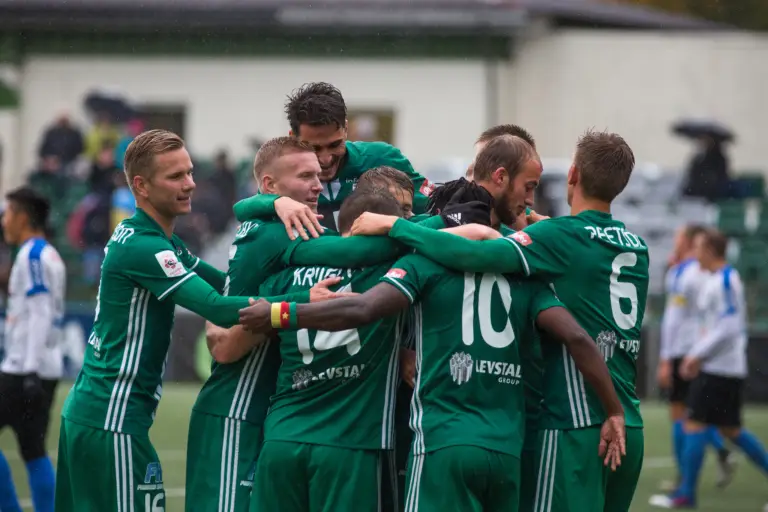
The year 2002 marks the beginning of a new era in FC Levadia's history. Firstly, because for the first and likely the last time, no fewer than three teams bearing the FC Levadia name competed in the Meistriliiga simultaneously — the first team Maardu FC Levadia, Tallinna FC Levadia and Pärnu FC Levadia. Remarkably, midfielder Mati Paril managed to play at least one match for all three teams during the year — something that would no longer be possible under today's transfer regulations. Secondly, the working environment at the club became significantly more professional. Finnish coach Pasi Rautiainen arrived as head coach of Maardu FC Levadia, with Hannu Tuukkanen as his assistant. The Finns notably raised the overall intensity and quality of training and introduced the team to the true nature of professional football. For example, Maardu FC Levadia held pre-season training camps in Turkey and in spring in Germany, where they played friendly matches against strong opponents. The Meistriliiga season was extremely gripping and tense from the first match to the last, with Rautiainen's emotionality and charisma adding further colour. In the final match of the season, which decided the fate of the gold medal, Maardu FC Levadia and FC Flora met at Kadriorg Stadium in front of nearly 3,200 spectators — a goalless draw secured the gold medal for FC Flora for the second consecutive year, by a margin of just two points. Naturally, the coaches, players and club management were deeply disappointed, while at the same time feeling proud of the fierce fight and maximum effort shown.
Tallinna FC Levadia finished sixth under Valeri Bondarenko and Pärnu FC Levadia eighth under Meelis Eelmäe. In 2002, Maardu FC Levadia was already based in Tallinn, training and playing at Kadriorg Stadium. Tallinna FC Levadia's home matches were held at Viimsi Stadium and Pärnu FC Levadia's at Pärnu Beach Stadium. Despite modest results, the local FC Levadia team attracted considerable public interest in the summer capital.
A truly remarkable situation arose in the Estonian Cup, where Maardu FC Levadia and Tallinna FC Levadia met each other in the final at A. Le Coq Arena. Although Maardu FC Levadia were considered heavy favourites — and both clubs were also competing for a European spot — Tallinna FC Levadia came out on top thanks to two sharp counter-attacks by Ruslan Jagudin, winning 2:0. This allowed Tallinna FC Levadia to enter the UEFA Cup qualifying round, where they faced Israeli club Maccabi Tel Aviv, losing first at Kadriorg 0:2 and then by the same scoreline in Sofia, where the match was held due to the prevailing terrorist threat in Israel. Maardu FC Levadia were nonetheless able to participate in the UEFA Intertoto Cup, progressing through two rounds. They first faced Portuguese club UD Leiria, whose head coach José Mourinho had recently departed. The first match in Portugal was lost 0:1, but it later emerged that the opponents had fielded an unregistered player, and the defeat was overturned to a 3:0 technical victory. Maardu FC Levadia lost the return leg at Kadriorg 1:2, but advanced to the second round with an overall score of 4:2. There they put in a highly respectable performance against Swiss club FC Zürich — the first match away was lost to a last-minute penalty 0:1, and the second ended 0:0 at Kadriorg.
In the Supercup final at the end of the season, Tallinna FC Levadia lost to FC Flora on penalties 1:4 after both normal and extra time ended 1:1. At the conclusion of a colourful season, Rautiainen announced his wish to return home for family reasons, and Hannu Tuukkanen also declined the opportunity to continue as head coach of Maardu FC Levadia. Two further events deserve special mention: FC Levadia organised a charity event at Kadriorg Stadium — "Health for Children — NO to Drugs!" — which was patronised by Ukrainian pole vault legend Sergei Bubka, who visited Tallinn for the occasion. A children's football camp, Inter Campus 2002, was also held at Kadriorg in cooperation with Italian club Internazionale Milano.
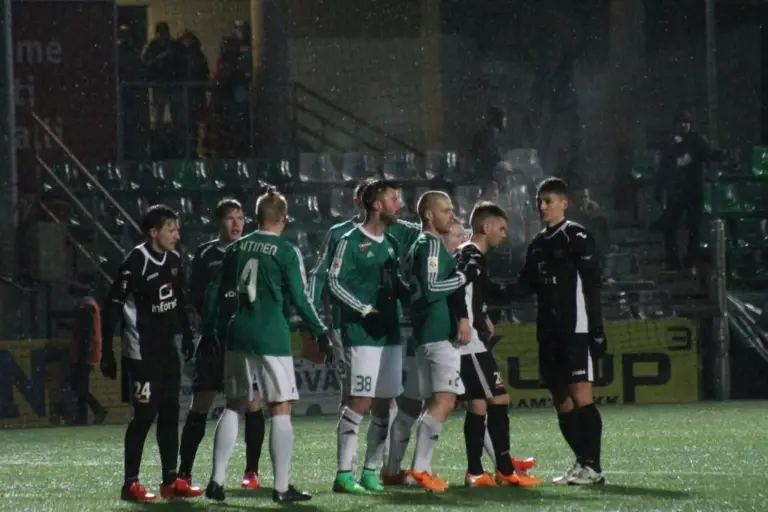
In place of Rautiainen, Maardu FC Levadia hired Italian Franco Pancheri as their new head coach — a man who had previously spent several years working in Internazionale Milano's youth system and who had won the Italian championship as a player with Inter in 1980. Estonian football legends Tarmo Rüütli and Urmas Kirs joined as assistant coaches, the latter only for a short period. Unfortunately, Pancheri was unable to maintain the level achieved under Rautiainen. Both the Meistriliiga and cup campaigns got off to poor starts, largely due to a language barrier that prevented mutual understanding between the head coach and the players. In June, the FC Levadia board decided to terminate Pancheri's contract and appointed assistant coach Tarmo Rüütli as the new head coach, under whom the team quickly recovered from their difficult spell and finished the season with a bronze medal. Looking slightly ahead, it can be said that this also laid a solid foundation for the most golden period in the club's history.
In the UEFA Cup, Maardu FC Levadia put up fierce resistance against Croatian opponents NK Varteks Varaždin, losing 1:3 at home and narrowly 2:3 away. NK Varteks's sporting director at the time was Zlatko Dalić — the man who would later become head coach of the Croatian national team and a hero of the 2018 and 2022 World Cup tournaments.
Tallinna FC Levadia again finished sixth in the Meistriliiga. Once again, a charity event — "Health for Children — NO to Drugs!" — was held at Kadriorg Stadium, this time patronised by Russian ice hockey legend Vladislav Tretiak, who visited Tallinn for the occasion.
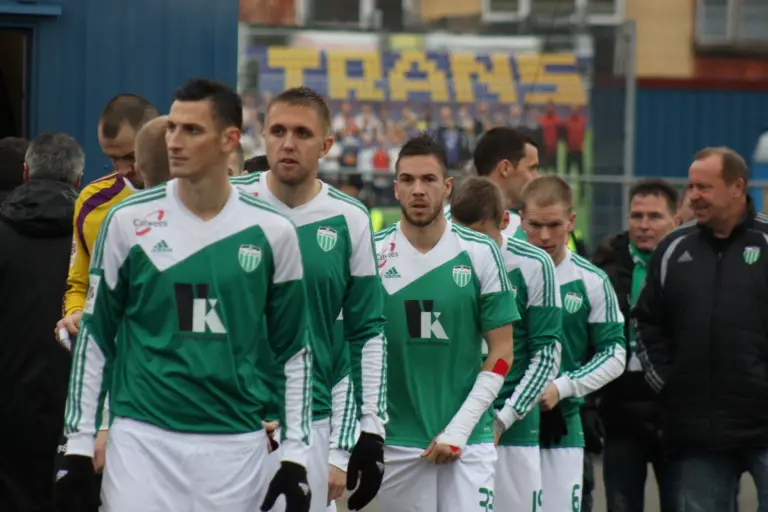
2004. is arguably one of the most memorable and brightest years in the club's history. Prior to the start of the season, FC Levadia's board decided to continue in the Champions League with just one representative team, Tallinn FC Levadia. The former Tallinn FC Levadia was transformed into a duo team and started playing in the Premier League under the name FC Levadia II. Under the guidance of Tarmo Rüütel, Tallinn FC Levadia won the third Estonian championship in the club's history, beating FC TVMK by six points and FC Flora by 11 points. In the Estonian Cup final, FC TVMK were defeated 3:0, but FC Flora were beaten 2:1 in the Super Cup final. FC Levadia were also successful in the first preliminary round of the UEFA Cup. The first match against Irish club Bohemian FC in Kadriorg ended in a goalless draw, while the Estonian club won the replay in Dublin 3:1. In the second preliminary round, FC Levadia met FK Bodø/Glimt of Norway and came very close again, losing 2-1 to Bodø and winning by the same score in Kadriorg, with the goal scored just before extra minutes. As extra time did not change the score, penalties were taken and FC Levadia had to accept a very painful 7:8 loss.
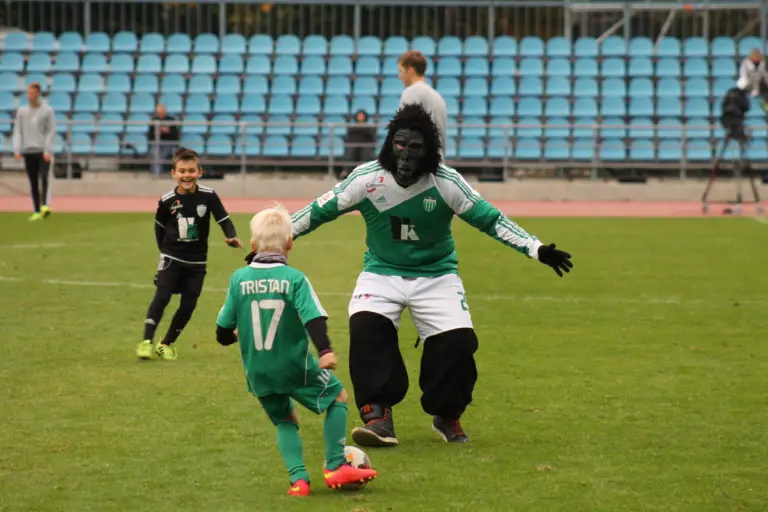
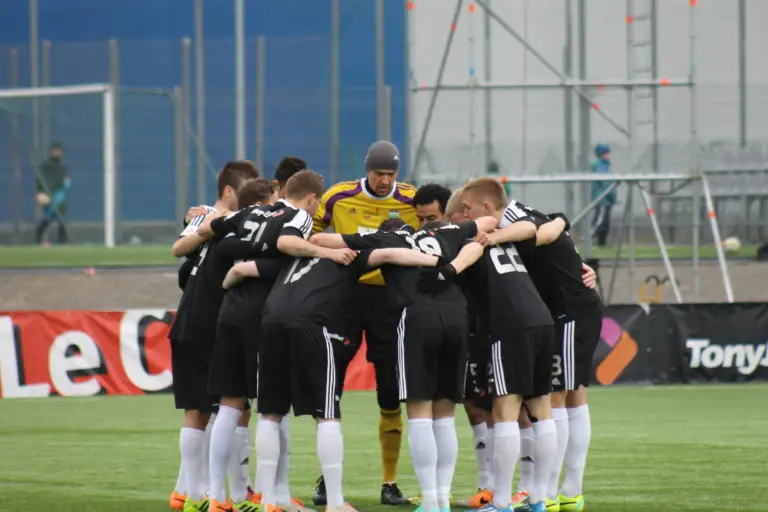
The Tallinna FC Levadia squad of 2006 can be considered one of the finest in Estonian football history. The team struck an excellent balance between experienced players — Marek Lemsalu, Konstantin Nahk, Deniss Malov, Indrek Zelinski and others — and emerging talents such as Artur Kotenko, Aleksandr Dmitrijev, Konstantin Vassiljev, Taijo Teniste, Sander and Eino Puri, Ats Purje and Nikita Anderjev, which produced outstanding results on the pitch.
In the Meistriliiga, FC Levadia won the club's fourth gold medal, finishing 11 points ahead of JK Narva Trans and 12 ahead of FC Flora. The team did not reach the Cup or Supercup finals that year, but performed brilliantly in European competition. In the UEFA Cup, they first defeated Finnish club FC Haka Valkeakoski 2:0 at Kadriorg and progressed to the second qualifying round despite losing the away leg 0:1. There, the draw paired them with Dutch club FC Twente Enschede, whose defeat seemed an almost unimaginable feat. Yet FC Levadia drew 1:1 in the first leg away from home, and despite enormous pressure from the opponents, won the return match 1:0 thanks to a masterful free kick from Konstantin Nahk.
In the first round of the UEFA Cup, FC Levadia faced English Premier League club Newcastle United, managed at the time by the late Glenn Roeder. The first match at a sold-out A. Le Coq Arena ended in a 0:1 defeat, and the return leg at the legendary St. James' Park was lost 1:2. Newcastle United's squad included, among others, Shay Given, Emre, Damien Duff, Antoine Sibierski and Obafemi Martins. FC Levadia's women's team participated in the Women's Meistriliiga for the first time, finishing the season with a silver medal. Another landmark event of the year was the merger with the youth club known as JK Kotkas-Juunior, which gave birth to FC Levadia's broad-based youth academy.
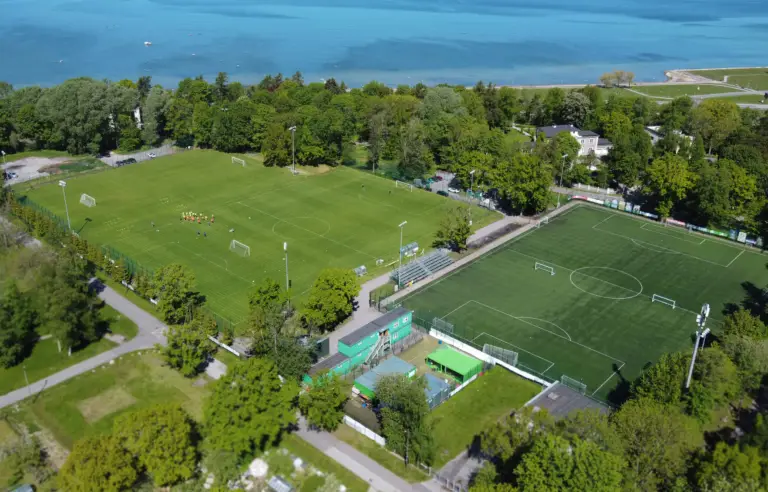
Levadia's new training base.
The 2007 season was also extremely successful for FC Levadia. The Estonian championship title was won once again, this time by an eight-point margin over FC Flora. To complete the domestic double, JK Narva Trans were beaten 3:0 in the Cup final, while the Supercup final was lost to the same opponents 1:2.
In the first qualifying round of the UEFA Champions League, FC Levadia defeated Macedonian club FK Pobeda Prilep 1:0 on aggregate, with Konstantin Nahk scoring the decisive goal in the first leg played in 40-degree heat away from home. In the second qualifying round, the team came agonisingly close to shocking Serbian giants FK Crvena Zvezda Belgrade — after losing the first leg away 0:1, Levadia won the return match at Kadriorg 2:1, with Nahk scoring a stunning goal from the centre circle. In the end, the Red Star progressed to the next round solely by virtue of the away goals rule.
A landmark moment in the club's history was the opening of the fully renovated FC Levadia Football Centre, attended as a guest of honour by Portuguese football legend Eusébio. FC Levadia's women's team won the Estonian championship title for the first time, under head coach Maksim Rõtškov.
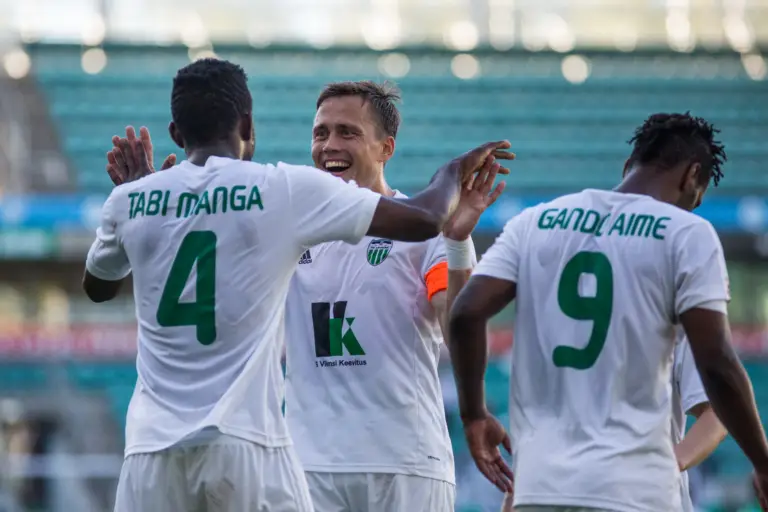
After two consecutive league titles, the season started with a cold shower for FC Levadia, who first lost 4-1 to JK Narva Trans in the Super Cup final. As Tarmo Rüütel had also become the head coach of the Estonian national team in the meantime, the board of FC Levadia decided to thank him for his work and terminate his contract. Igor Prins, the club's legendary former captain and current assistant coach, became the new coach. Prins picked up where Rüütli left off, guiding the team to a third consecutive Estonian championship - the tightest gold medal battle in recent years ended with FC Levadia beating FC Flora by two points. FC Levadia did not reach the Cup final this time, losing to FC Flora in the semi-final 1:4 after a 1-1 draw in normal and extra time, after penalties. On the European pitches, things were also worse than expected as Irish champions Drogheda United lost 1-2 in Dublin and 0-1 in Kadriorg. Like the team, FC Levadia's women's team defended the championship title they won last autumn.
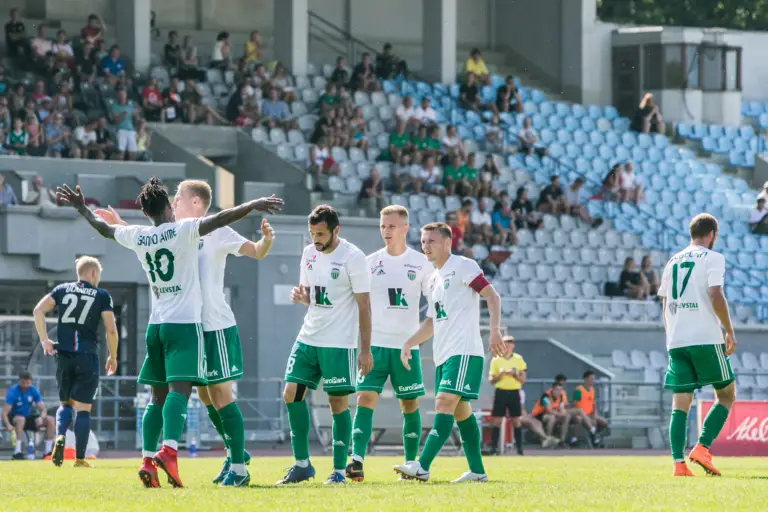
In 2009, FC Levadia became Estonian champions for the fourth consecutive time and the seventh time overall, doing so with a commanding margin over their rivals — second-placed JK Sillamäe Kalev and third-placed JK Narva Trans finished 21 points behind, while great rivals FC Flora trailed by as many as 25 points. In the pre-season Supercup final, however, FC Flora proved stronger, winning 2:1.
In the UEFA Champions League, FC Levadia pulled off another major upset by eliminating Polish club Wisła Kraków. The first match ended 1:1 away from home, and the fate of the return leg was decided in the dying minutes by a beautiful long-range strike from Vladislav Ivanov. In the second qualifying round there was no way past Hungarian side Debreceni VSC, with two 0:1 defeats ending the campaign. Under the new competition format introduced by UEFA, FC Levadia dropped into the first qualifying round of the UEFA Europa League, where they faced Turkish powerhouse Galatasaray Istanbul. The opening match in the "Turkish cauldron" was lost heavily 0:5, while the return leg at Lilleküla ended 1:1. In the Women's Meistriliiga, FC Levadia won the Estonian championship title for the third consecutive time.
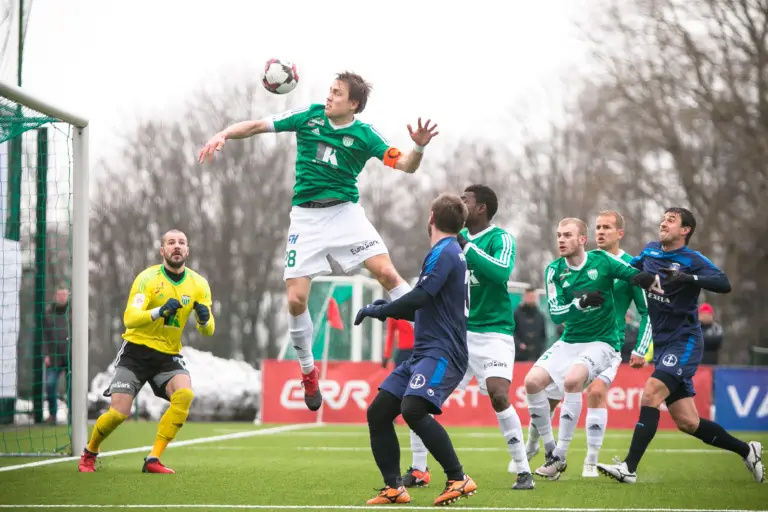
2010. Tallinn FC Levadia started the spring of 2010 with two cup victories - FC Flora was defeated 2-0 in the Super Cup final and 3-0 in the cup final. However, the most spectacular of all - a fifth consecutive Estonian championship title - was not to be - at the end of the season, FC Flora, who were champions again after a seven-year break, beat FC Levada by five points. 3. On 1 August, the head coach of the team changed, when Igor Prince was replaced by Aleksandr Pushtov, a former Estonian national team player who had been coaching FC Levadia II in the Premier League.
In the Euros, the story led to a rematch with last year's familiar Debrecen VSC. The opening match in Kadriorg ended in a 1-1 draw, but a 2:3 loss in the second leg ended the Euro journey sooner than expected.
FC Levadia's three-season reign in the Women's Champions League also came to an end, this time they had to settle for bronze after Pärnu JK and FC Flora.
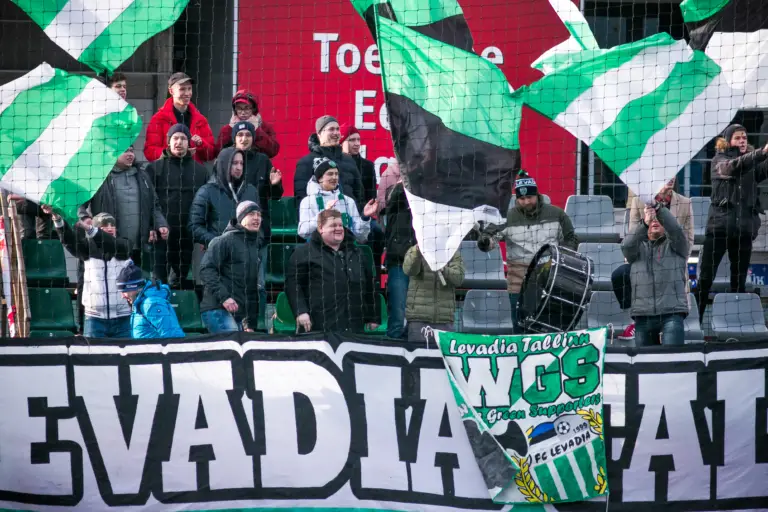
The year 2011 will go down in FC Levadia's chronicles as a series of disappointments. In the Meistriliiga, the team finished without medals for the only time to date, ending up in fourth place behind FC Flora, Nõmme Kalju and JK Narva Trans. In the pre-season Supercup final, the team lost to FC Flora on penalties 3:5 after a goalless draw in normal time, while the cup campaign had already come to an end the previous autumn when the team fell 0:1 to JK Tallinna Kalev in the round of 32.
In the UEFA Europa League, fortune seemed to smile on FC Levadia — but deceptively so. A 0:0 draw away to Luxembourg club FC Differdange 05 raised expectations sky-high ahead of the return leg, but an unexpected 0:1 defeat at Lilleküla brought the campaign to a disappointing end. Poor results once again led to a change of coach: on 26 July, the collaboration with Puštov was terminated by mutual agreement, and the team was led for the remainder of the season by former captains Sergei Hohlov-Simson and Marek Lemsalu. In the Women's Meistriliiga, FC Levadia claimed the bronze medal for the second consecutive year, with Pärnu JK and FC Flora again finishing ahead of them.
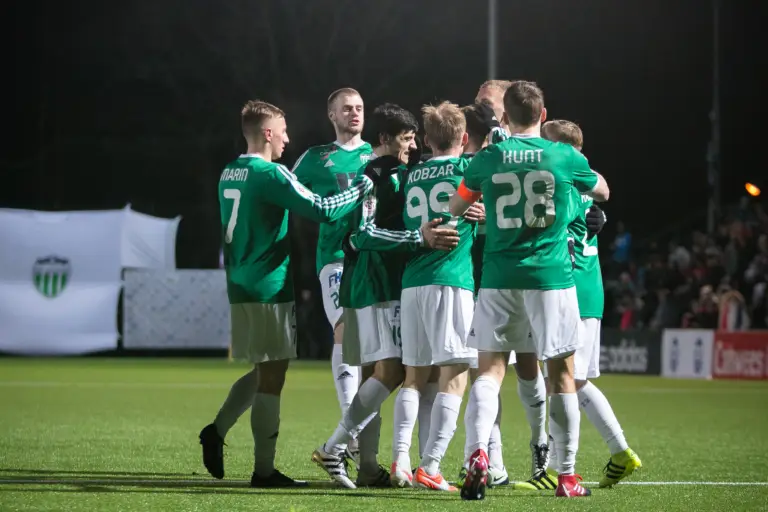
After two unsuccessful seasons, FC Levadia's management made significant changes at the club: several experienced players left at the end of their contracts and a significant rejuvenation was carried out. Former Estonian national team legend Marko Kristal was invited to coach the team, with Indrek Zelinski taking over as assistant coach.
2012. is so far the only year in the history of FC Levadia and FCI Levadia when the club did not set the goal of the season to win the Estonian championship, but to lay the foundations for future seasons. This approach was fully justified. FC Levadia narrowly won the silver medal in the Champions League, finishing nine points clear of first-time Estonian champions Nõmme Kalju and two points ahead of FC Flora. A UEFA Europa League place was secured thanks to a cup win, beating JK Narva Trans 3-0 in the final.
The Euro Series also managed to complete one round. First, they defeated Lithuanian club FK Šiauliai thanks to an away goal (1:0 in Kadriorg, 1:2 in Šiauliai), but then they lost to Cypriot club Anorthosis Famagusta 1:3 in Kadriorg and 0:3 in Larnaca.
In the Women's Champions League, it was business as usual - FC Levadia again won the bronze medal after Pärnu JK and FC Flora.
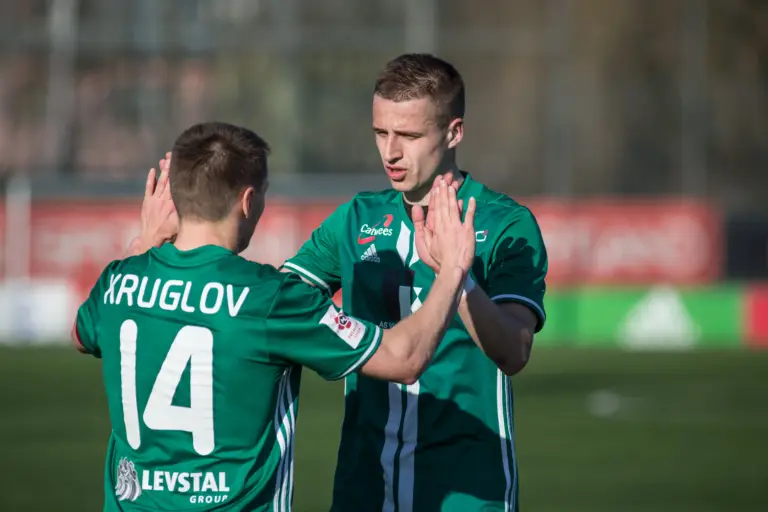
The changes bore fruit.
The rejuvenation programme of the previous season paid off and Tallinn FC Levadia were crowned Estonian champions again after a four-year break! Marko Kristal's team showed a good and steady performance throughout the season and managed to turn many games in their favour, especially in the dying minutes. FC Levadia ended up with 91 points, JK Nõmme Kalju 84 and JK Sillamäe Kalev 75.
In the pre-season Super Cup final, Nõmme Kalju were defeated 3:0. On the other hand, the journey to the Estonian Cup came to an end in the quarter-finals with a 3:4 loss to Kalju in extra time.
FC Levadia lost the first leg of their UEFA Europa League I preliminary round tie against Welsh club Bala Town FC 1-0, but won the replay in Kadriorg 3-0 thanks to Rimo Hund's hat-trick. In the second leg, they drew goalless at home with Romanian club Targu Jiu Pandurii, but lost 4-0 away.In the Women's Champions League, FC Levadia again won the bronze medal after Pärnu Jalgpalliklub and FC Flora.
This time, the league season turned out to be a cracker, and in the final round, three clubs had a chance to win the title. FC Levadia left nothing to chance and secured their second consecutive and ninth gold medal with an 8-1 away win over JK Narva Transi, scoring 84 points against JK Sillamäe Kalev and FC Flora 79.
The golden double was completed with a 4-0 win over Tartu FC Santos in the Estonian Cup final. In the Super Cup final, they had to accept a 0:1 loss to FC Flora.
In the UEFA Champions League I preliminary round, FC Levadia were convincingly beaten by San Marino champions SP La Fioritas (1-0 away, 7-0 at home), but then suffered a heavy 7-0 defeat to AC Sparta in Prague. The second leg in Kadriorg resulted in a 1-1 draw.
In the Women's Champions League, FC Levadia won another bronze medal after Pärnu Jalgpalliklubi and FC Flora.
FC Levadia went into the season with the firm goal of winning their third consecutive and tenth Estonian championship title, but unfortunately they failed. After the first two rounds, FC Levadia led the standings by a day, but by the end of the season, championship rivals FC Flora were six points ahead of the Reds. The bronze medal team Nõmme Kalju remained five points away from FC Levada.
In the Estonian Cup, the team suffered an unfortunate fiasco in the 1/16 finals when they had to accept a technical loss to Saue Jalgpalliklub for using an ineligible player. In the pre-season Super Cup final, last year's cup final opponents Tartu FC Santos were defeated 5:0.
In the UEFA Champions League preliminary round, the club also had to swallow a bitter pill. The lottery was played against Northern Ireland champions Crusaders FC, who first played a 0-0 draw in Belfast and then a 1-1 draw in Tallinn. A goal from the outside took the "crusaders" to the next round.
At the end of the season, FC Levadia ended the cooperation with the current head coach Marko Kristal and his assistant Indrek Zelinski. Preparations for the new season started under the guidance of head coach Sergei Ratnikov and assistant coach Urmas Hepner.
In the Women's Champions League, FC Levadia won the bronze medal for the sixth consecutive season after Pärnu Jalgpalliklubi and FC Flora.
By bringing Sergei Ratnikov back as head coach, FC Levadia hoped to return to their roots and rediscover the brilliance and success of their earliest seasons — in 1999 and 2000, the team had not lost a single Meistriliiga match under Ratnikov's guidance. Unfortunately, this backward-looking manoeuvre did not bring the hoped-for results — the team's play was rocky from the start of the season, and Ratnikov's time came to an end in July, with Igor Prins returning to take charge. Since the rivals also failed to show convincing consistency, the battle for the championship title and medals continued until the final round. FC Levadia finished with the silver medal for the second consecutive year, falling just two points behind Tallinna FC Infonet, who celebrated their first ever championship title. Third place went to Nõmme Kalju and fourth to FC Flora, finishing three and five points behind FC Levadia respectively.
The cup campaign again came to an early end when the team suffered a 0:1 away defeat to JK Sillamäe Kalev in the round of 16.
In the UEFA Europa League, FC Levadia performed creditably. In the first qualifying round, Faroese club HB Tórshavn were eliminated with an overall score of 3:1 across two legs — the opening match at Kadriorg ended 1:1, while the Estonian club secured an important 2:0 victory away from home. The first leg of the second round against Czech club SK Slavia Praha at Kadriorg offered FC Levadia fans a true treat, ending with a 3:1 victory for the green shirts. In the return match at Eden Arena in Prague, Slavia won 2:0 and advanced to the third qualifying round by virtue of the away goals rule.
At the end of the season, the FC Levadia board decided to extend their collaboration with head coach Igor Prins — under his guidance the team had produced an excellent second half of the season and remained in contention for the title until the final round. Particularly worthy of note was the role of Russian footballer Anton Miranchuk: the attacking midfielder joined FC Levadia on a one-year loan from Lokomotiv Moscow and emerged as a leader within the team over the course of the season. Miranchuk scored 14 goals and provided 9 assists in 30 Premium Liga matches, becoming one of the brightest stars of both FC Levadia and the league as a whole. Upon returning to Lokomotiv, Miranchuk established himself among the club's key players and earned a call-up to the Russian national team. In the Women's Meistriliiga, FC Levadia claimed the bronze medal for the seventh consecutive year, once again finishing behind Pärnu Jalgpalliklubi and FC Flora.
The merger of two clubs.
FC Levadia once again entered the Premium Liga season with high expectations, but an evenly contested campaign ended with a silver medal for the third consecutive year. FC Flora claimed the Estonian championship, finishing six points ahead of FC Levadia, who in turn held a six-point advantage over third-placed Nõmme Kalju.
In the cup competition, the green shirts' journey again came to an end in the round of 16, where they lost 1:2 away to eventual cup winners Tallinna FC Infonet. In the first qualifying round of the UEFA Europa League, FC Levadia faced Irish club Cork City. Due to renovation works at Kadriorg Stadium, the first leg was held at Pärnu Beach Stadium, which FC Levadia lost 0:2. In the return match, FC Levadia were again beaten by two goals away from home, this time 2:4.
At the end of the season, FC Levadia and Tallinna FC Infonet — reigning cup holders and 2016 Meistriliiga champions, who had finished fourth in the league that year — announced the merger of the two clubs, with the aim of forming a strong and forceful team capable of achieving great things both in the domestic Meistriliiga and in European competition. The new head coach of the combined club was the Serbian manager of the former FC Infonet, Aleksandar Rogić.
In the Women's Meistriliiga, FC Levadia claimed the bronze medal for the eighth consecutive year, once again finishing behind Pärnu Jalgpalliklubi and FC Flora.
FC Levada became FCI Levadia.
2018. In many ways, the year marks a new beginning in the history of the club. Following the merger of FC Levadia and FC Infonet, the representative team was renamed FCI Levadia and the first division duo FCI Levadia U21. Both FC Levadia Jalgpallikool and Jalgpallikool Infonet continued to operate under their current names. FCI Levadia's home stadium was also changed - from Kadriorg to A.Le Coq Arena due to better conditions.
With the arrival of Aleksandar Rogić, FCI Levadia's sporting activities became much more thorough, systematic and professional. The Serbian head coach was able to assemble a strong representative team based on the players of FC Levadia and FC Infonet, and thanks to the joining of the clubs, the team had the opportunity to use the Punane Street football hall for winter training, as well as to visit Turkey for a pre-season training camp.
The long-awaited football season started very successfully for FCI Levadia: first, FC Flora were defeated 2-2 in the Estonian Super Cup final after normal time on penalties. Due to the snowy conditions, the game was played in Lilleküla football hall and it was also the first time in Estonian football history that the cup final was played under the roof. FCI Levadia qualified for the Super Cup as the successor to FC Infonet. FCI Levadia reached the final of the Estonian Cup named after Evald Tipner, where they also defeated arch-rivals FC Flora 1:0.
In the opening round of the UEFA Europa League, Dundalk FC were again the opponents. FCI Levadia narrowly lost the opening match in Kadriorg 0:1 and the replay on the "green island" 1:2.
The Premium League season turned out to be an exceptionally exciting one, with the medal race going down to the last round. Although FCI Levadia beat FC Flora 2:1 in the deciding game, it was only enough to win the silver medal. The second gold medal in their history was won by Nõmme Kalju FC, beating FCI Levada by two points and FC Flora by three.
In the Women's Champions League, FC Levadia finished with a bronze medal for the ninth consecutive year. It was also the last season for the Maarjamäe women's team in the senior competition. FC Flora won their first gold this time, ahead of Pärnu Jalgpalliklubi, the current league leaders.
A fourth consecutive silver medal and a narrow championship defeat motivated FCI Levadia's management to approach the new season with even greater ambitions. Once again, Aleksandar Rogić was at the helm of an extraordinary preparation, laying the foundations for the season both in the Red Street Football Hall and at a long training camp in Turkey.
Alas, the season has been rocky. FCI Levadia had to concede the Super Cup final to reigning champions Nõmme Kalju FC 3:2. In the semi-final of the Cup, they had to settle for a 2:3 loss in extra time against the same opponent.
FCI Levadia lost the opening leg of the UEFA Europa League I preliminary round against Icelandic club Stjarnan FC 1-2 and won the second leg at their new home stadium A.Le Coq Arena by the same score. Dmitry Kruglov put the Greenshirts 3-1 ahead from the penalty spot in the following extra time, but the opponents managed to draw the game level from the last ball and qualify for the next round thanks to a goal scored away from home. The disappointment was great!
The poor results inevitably led to a change of head coach - 15. Rogić resigned by mutual agreement on 1 September, and the team was coached until the end of the season by Vladimir Vassiljev. FCI Levadia finished as silver medallists for the fifth year in a row, losing to champions FC Flora by 12 points and beating bronze medallists Nõmme Kalju by one point.
FCI Levadia's U19 team was the first Estonian club to debut in the UEFA Youth League, when they met Icelandic club IA Akranes in the opening round. The opening match away ended in a 0:4 defeat, in the replay at Sportland Arena FCI Levadia had to accept a 1:12 defeat.
COVID.
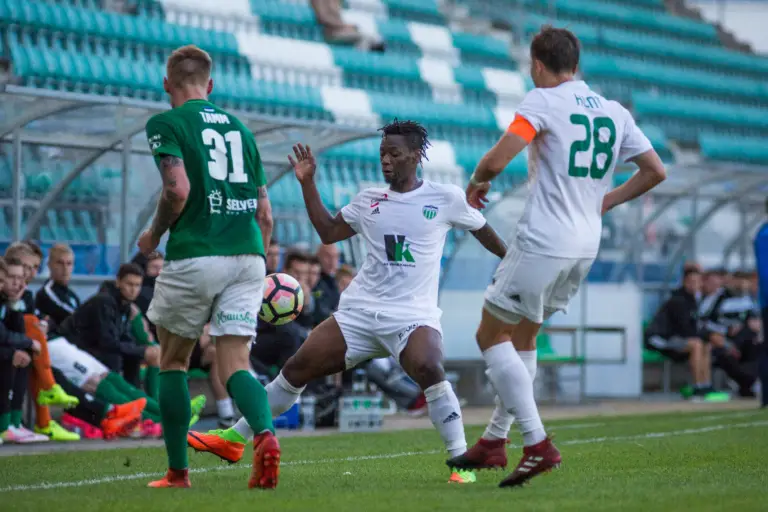
FCI Levadia's new head coach is the former Estonian national record holder Martin Reim. As always, the club went into the football year with high expectations. With the global COVID-19 pandemic that started in March, it has been a very difficult season for the club and for world football as a whole.
In the opening match of the Premium League season, FCI Levadia defeated FC Kuressaare 1:0 at the Sportland Arena, but after that, the coronal pandemic put both everyday life and football on hold for almost two months. Team training was banned for almost two months under the state of emergency in the country, and the football pitch returned in early May. The season only resumed on 19. On 1 May, FCI Levadia defeated Tallinn JK Legion 2:0 at the empty Kadriorg Stadium.
In the first four matches FCI Levadia remained unbeaten, but then the game started to falter, and there were defeats to Nõmme Kalju (0:2) and FC Flora (0:4) and several draws. At the beginning of July, head coach Martin Reim announced his resignation. Vladimir Vassiljev took over again, and in August he was replaced by Serbian Marko Savić, who had previously been assistant coach at the club. The two-man tandem carried the team to the bronze medal - champions FC Flora finished the season with 80 points, Paide Linnameeskond 64, FCI Levadia 57 and Nõmme Kalju 49. Due to the pandemic, the season was shortened - Paide Linnameeskond and Nõmme Kalju played 30 league games instead of 36, while FC Flora and FCI Levadia played 30 and 29 matches respectively. The last round match FC Flora - FCI Levadia was not played at all due to the viral outbreak in both teams, as the result would not have affected the overall standings.
FCI Levadia's journey in the 2019/2020 Estonian Cup ended in the round of 16 when they lost 1:2 at home to Nõmme Kalju.
Due to the basketball crisis and the postponed season, the UEFA Europa League preliminary round saw a significant change - instead of two matches, only one was played at the home ground of the first team drawn from the draw. FCI Levadia had to travel to the Faroe Islands, where they unexpectedly had to concede 4:3 to B36 Tórshavn in extra time. In the process, FCI Levadia, who travelled to the small islands of the Atlantic without several key players, gave a 3:1 lead.
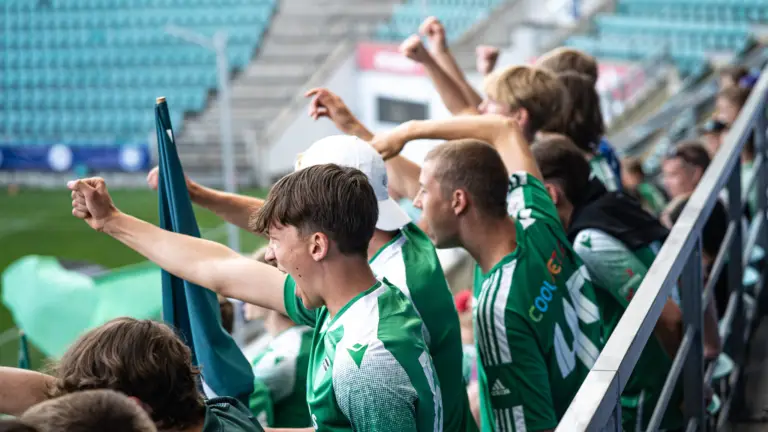
2021 proved to be one of the most memorable seasons in the club's history, as FCI Levadia claimed a golden double — winning the Estonian championship for the tenth time and the Cup for the tenth time. The team also advanced past the first round in European competition for the first time in many years. The Premium Liga season was extremely tense, with the champion only being decided in the final round when FC Flora and FCI Levadia met at a snow-covered Sportland Arena. Despite the pandemic, football continued, although some matches were postponed. The season was played in a shortened format, as in the previous year.
Once again the eternal rivals — FCI Levadia and FC Flora — battled it out for the title. Despite FCI Levadia failing to beat FC Flora in a single Premium Liga match all season, the team under Marko Savič and Vladimir Vassiljev claimed the championship by the narrowest of margins — just one point. The hero of the decisive match, striker Robert Kirss, scored both goals in that game and the only goal in the Cup final against FC Flora, winning 1:0.
Despite missing out on the title and losing the Cup final, FC Flora could take pride in their season, becoming the first Estonian club to reach the group stage of the UEFA Conference League. FCI Levadia played four matches in the new European tournament: first eliminating Gibraltarian club St. Joseph's FC with an overall score of 4:2, before losing to Irish club Dundalk FC with an overall score of 3:4.
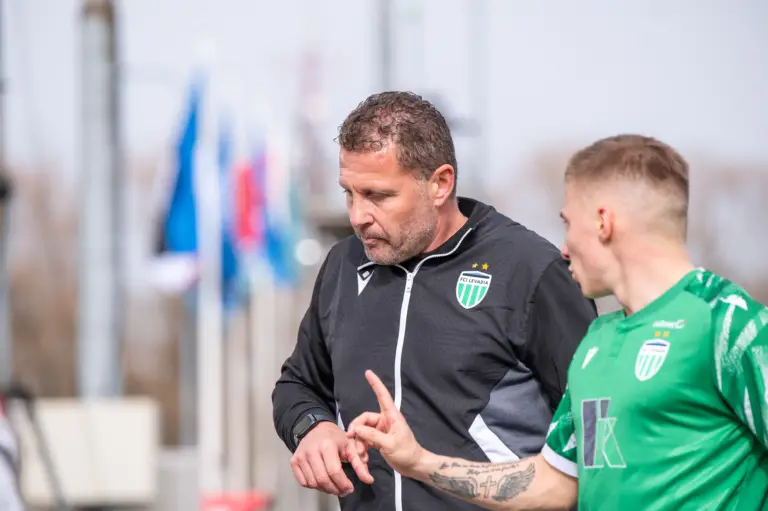
Following the golden season, FCI Levadia's ambitions were understandably high. However, 2022 proved to be a true rollercoaster ride for the club. In the Supercup final, FCI Levadia completed a treble, defeating FC Flora on penalties 4:2 after a goalless draw in normal time. Unfortunately, all three trophies did not remain in the club's cabinet for long, as FC Flora took revenge with a 2:0 win in the Cup quarterfinal.
The Premium Liga season got off to a perfectly respectable start. However, the team were hit with a cold shower in the UEFA Champions League qualifying round, where they lost 1:6 to Icelandic club Víkingur Reykjavík in the semi-final of a four-team qualifying mini-tournament held in Iceland. Savić and Vassiljev subsequently decided to step down, informing the squad of their decision at the end of the home match against JK Tallinna Kalev on 1 July.
The reins of the FCI Levadia first team were taken over by reserve team coach Ivan Stojković, who remained in charge until 12 September, doing his best to keep the team on course for the title. He was replaced by Ukrainian Maksym Kalinichenko, whose tenure as FCI Levadia head coach was limited to a shocking 2:3 home defeat to FC Kuressaare. Following the Ukrainian's departure, former assistant coach and club striking legend Nikita Andrejev guided the team through the remainder of the season. Having undergone such major changes, FCI Levadia were no longer able to mount a serious title challenge, but comfortably kept all other medal contenders at bay. FC Flora ultimately finished with 97 points, FCI Levadia with 79, while Paide Linnameeskond and Nõmme Kalju tied on 65 points each.
At the end of the season, former Valencia CF and Spanish national team defender Curro Torres took over as head coach of FCI Levadia.
The 2023 season began with high expectations, as it marked the first season of Curro Torres — who had previously won the Europa League preliminary round with Valencia — as head coach. The campaign got off to a strong start, with five wins from the first six matches.
The opening match of the season ended in a 0:0 draw against Pärnu Vaprus, but five of the following five matches were won. Across the full season, the team suffered only three defeats and won 22 matches. Mid-season brought another cold shower when FCI Levadia faced Slovenian club MŠK Žilina in the UEFA Conference League qualifying rounds.
The first leg was played away in Slovenia, where the score stood at 1:1 going into the 90th minute, but the hosts struck in the 90+3rd minute to take the win. A similar pattern unfolded in the return leg's first half. The visitors took an early lead, but by the 10th minute the score was level at 1:1. The visitors regained the lead in the 45+3rd minute and the match ended with that scoreline. Overall, the Slovenian club advanced to the next round with a 4:2 aggregate score.
The team continued their pursuit of the Premium Liga title while also embarking on a new cup season. In the first round they faced FA Tartu Kalev, winning 6:2 away from home, and in the final match of the season defeated Tartu JK Tammeka at home 4:2. Maksimilian Skvortsov — a Levadia academy graduate born on 20 December 2007 — scored his first goal for the FCI Levadia first team in that match, which took place on 24 November 2023.
Towards the end of the season, FCI Levadia found themselves in the role of pursuers, chasing Flora in the Premium Liga, yet still managed to keep the title race alive until the final matchday. The green shirts needed Flora to drop points against Nõmme Kalju while winning away at Paide Linnameeskond themselves. Flora did drop points, drawing 0:0 with Kalju, but Levadia also drew with Paide Linnameeskond, and the Premium Liga title was lost by two points. Flora finished with 79 points and Levadia with 77.
Compared to the previous season, greater stability had been achieved, and expectations heading into 2024 were high. The team had reached the Cup quarterfinal, and the players trusted and enjoyed playing under the new head coach.

Treble.
The 2024 season was one of the best in FCI Levadia's history. Under head coach Curro Torres, the club won all three domestic trophies in a single season — only the third time in the combined club's history, following Levadia's legendary trebles in 1999 and 2000, and Tallinna FC Infonet's treble in 2016. The trophies were the Supercup, the Meistriliiga title — the club's eleventh championship — and the Estonian Cup. The season ran from 1 March to 9 November. Preparations included a pre-season training camp in Spain with matches against high-level opponents, giving the squad a strong foundation from the very start.
In the Meistriliiga, Levadia were consistent and commanding throughout, reclaiming the title from defending champions FC Flora. Attacking football was the hallmark of the team's style, with midfielder Mihkel Ainsalu emerging as one of the key players and finishing as the team's top scorer in the league. In the Estonian Cup final, FCI Levadia defeated Nõmme Kalju 2:1 to complete the historic treble.
In the UEFA Conference League qualifying rounds, FCI Levadia advanced past the first round with a composed 2:0 aggregate victory over Lithuanian side FA Šiauliai. In the second qualifying round, the team faced Croatian top-flight club NK Osijek. Despite taking an early lead through Ioan Yakovlev in the first leg in Croatia, Levadia conceded five goals and lost 1:5. The return leg at A. Le Coq Arena ended 0:1, with Osijek advancing 6:1 on aggregate, ending Levadia's European campaign for the year.
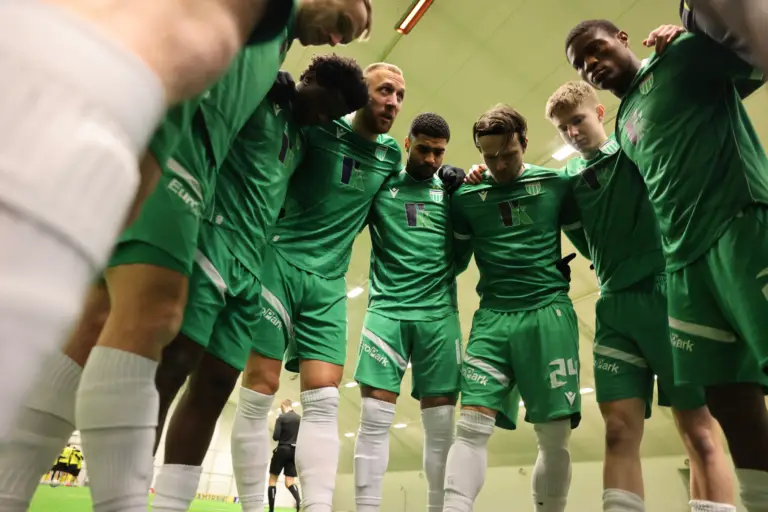
2025 — Ambitions, Europe and a New Era.
FCI Levadia entered the 2025 season as defending champions with high ambitions — to reach a European group stage for the first time in the club's history. The season ran from 28 February to 8 November. Before the campaign began, the team won their ninth Estonian Supercup, defeating Nõmme Kalju.
In the UEFA Champions League first qualifying round, Levadia faced Latvian champions FK RFS. The first leg at A. Le Coq Arena was lost 0:1 to a 55th-minute penalty, and the return match in Riga brought no turnaround, ending the team's Champions League campaign. Under the new competition format, the club dropped into the UEFA Conference League qualifying rounds. In the second qualifying round, Levadia faced Georgian champions FC Iberia 1999 Tbilisi. The home leg was won 1:0 thanks to a goal from Ernest Agyiri, and in the tense return match in Tbilisi the team held on for a 2:2 draw, advancing with a 3:2 aggregate score. In the third qualifying round, Levadia met Luxembourg's FC Differdange 03 — the same opponent who had eliminated them in the 2011 Europa League. The first leg in Luxembourg was won 3:2, raising hopes of a historic breakthrough. However, the return match at A. Le Coq Arena in front of 4,063 fans proved heartbreaking: after a 1:1 draw at full time, Levadia conceded three goals in extra time to lose 1:3 on the night and 4:5 on aggregate, falling at the third qualifying round hurdle for the third time in the club's history.
In the Meistriliiga, the team produced an attacking and prolific season — FCI Levadia finished as the league's top scorers with 89 goals — but ultimately surrendered the championship title to FC Flora. The final standings saw Flora finish with 79 points, Levadia with 78 and Nõmme Kalju with 73. In the Estonian Cup final (2024–25), the trophy was decided by a penalty shootout in which Nõmme Kalju won 4:1 after a thrilling 3:3 draw in normal time. At the end of the season, head coach Curro Torres departed after three years in charge. His successor was Vjatšeslav Zahovaiko — a former Estonian international and one of the most prolific forwards in Meistriliiga history with 211 goals in 309 appearances, who had previously managed Paide Linnameeskond and led FCI Levadia's U17 side to the Estonian youth championship.
