FCI Levadia youth development awarded level 3 quality standard
FCI Levadia Football School has been awarded Level 3 of the Estonian Football Association’s youth development quality standard.
The Estonian FA’s youth development quality standard project has reached an important milestone, with several clubs – including FCI Levadia – advancing to the next level. This marks a significant step for Estonian football as a whole, as the project focuses on improving the quality of youth development and supporting the sustainable growth of clubs.
FCI Levadia achieved Level 3 of the quality standard, confirming the club’s commitment to structured and well-planned youth development. This level indicates that the club already meets high sporting and organisational criteria, including training methodology, coaching qualifications, player development, and overall club management.
The youth development quality standard is an initiative of the Estonian Football Association aimed at creating a unified framework for evaluating and developing youth systems across the country. The system consists of five levels: the first three primarily focus on strengthening grassroots clubs, while the two highest levels are aimed at football academies.
Levadia Football School Head of Youth Development Kristen Viikmäe:
“Developing youth football is a strategic priority for FCI Levadia. Our clear goal is to establish the FCI Levadia academy as one of the leading football academies in the Baltics and Scandinavia in the coming years. To achieve this, we work daily on improving sporting quality, organisational capacity, and the overall development environment.
FCI Levadia’s first team has been one of the top teams in Estonian football for decades, and it is very important for us that our youth system matches this ambition and level. We want our academy to serve as a strong foundation for the long-term success of the first team and to provide the club with increasing quality, identity, and homegrown talent.
The past season clearly showed that we are moving in the right direction – FCI Levadia youth teams were represented in all Estonian youth leagues and finished in the upper half of their respective tables. In addition, FCI Levadia U21 competed in Esiliiga, while FCI Levadia U19 secured a place in Esiliiga B for the 2026 season. This confirms the consistent development of our players and provides a strong pathway from youth to senior football.
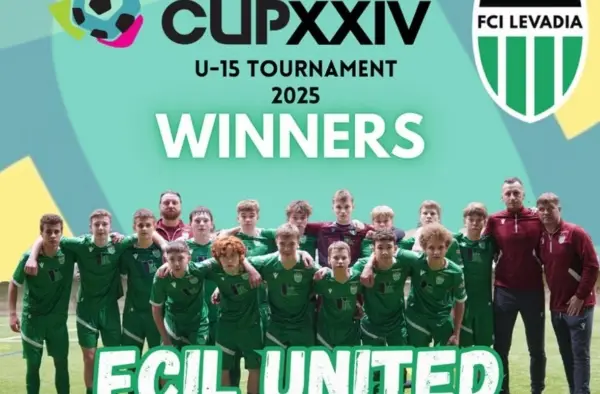
Cooperation between FCI Levadia and FC Infonet has also played an important role, adding depth and quality to our youth system. Joint teams under FCIL United have helped provide more young players with suitable development opportunities.
Achieving Level 3 of the quality standard is an important recognition for us, but certainly not the final goal. We see it as confirmation that we are on the right path and as motivation to take further steps toward even higher standards. In the coming years, we aim to further improve our youth development by engaging top-level coaches and developing infrastructure to provide players with the most professional and supportive environment possible.“
We also consider the overall development of youth football in Estonia to be extremely important. The quality standard helps clubs better understand their strengths and areas for improvement, while creating a unified framework for systematic development. The stronger youth development is across all clubs, the stronger the future of Estonian football as a whole,” said Kristen Viikmäe.
The first two levels are largely based on data from the Estonian FA’s registration and information system (ERIS). To achieve Level 1, a club must have at least one coach, two teams, and an organised management structure, vision, and mission. Level 2 requires at least six teams and three coaches.
Reaching Level 3 requires at least 12 teams, a larger coaching staff, and ensuring sustainability, including participation of youth teams in Estonian championships. FCI Levadia has now reached this level, demonstrating the strength and breadth of its youth system.
Level 4 represents academy status, with even higher requirements and greater responsibility. Level 5 signifies a competitive football academy at the Baltic and Nordic level.
The evaluation process assesses both sporting and organisational aspects. Sporting criteria include coaching, player development pathways, and training quality, while organisational criteria focus on leadership, strategy, and sustainability. The criteria are based on international standards, including UEFA and FIFA guidelines, as well as national requirements.
In 2026, 28 clubs participated in the system, most of which submitted the required criteria for evaluation. This clearly shows that Estonian clubs increasingly value structured and high-quality youth development.
For FCI Levadia, achieving Level 3 is an important recognition of the work done so far, but also motivation to continue progressing. The club aims to provide young players with the best possible environment to develop both as athletes and individuals, while building a strong foundation for future top-level players.
High-quality youth development is not only about better sporting results but also creates broader value for the football community. It helps develop aware, motivated, and versatile young people who can contribute to football in various roles – both on and off the pitch.
FCI Levadia will continue its focused work to take its youth system to the next level and serve as a role model in Estonian football.
Photo: FCI Levadia